


Material Management in Construction: Key Strategies and KPIs for Saudi Contractors Using ERP
23 Feb 2026
•
11 min read

Anna Fischer
Construction Content Writer


Material management in construction often fails not because materials are unavailable, but because timing and visibility are inconsistent. Early deliveries trap cash and fill storage space, while late deliveries idle crews and disrupt sequencing. Most disruptions don’t stem from a single major breakdown; they arise from small weaknesses in material flow management that accumulate over the project lifecycle.
The same problems repeat when site teams and offices work from different stock numbers, approvals slow procurement material management, or in-transit materials lack ownership. These gaps weaken the material management system and force teams into reactive decisions. Without reliable material management in ERP, inventory drifts from reality, and schedules become harder to control.
Understanding the real material management meaning is about creating a workflow where materials support progress instead of interrupting it. Contractors who connect planning, procurement, and inventory through ERP gain visibility and measurable performance through material management KPIs. This article explains practical strategies and ERP capabilities relevant to Saudi construction projects.
What Is the Material Management
Material management in construction is the coordinated process of planning, procuring, storing, and controlling materials from the earliest project stages through installation. Its purpose is straightforward yet critical: ensuring that every required material reaches the site in the right quantity, at the right time, and in the right condition to support uninterrupted project progress.
The process begins with defining material requirements and aligning them with the project schedule. This includes selecting suppliers, assessing delivery lead times, and evaluating whether bulk purchasing offers real value once storage needs, handling constraints, and potential waste are considered. When materials arrive on site, they must be organized and stored thoughtfully so crews can access them easily and installation can flow without disruption.
Material-related costs account for a large share of a project’s total budget, which is why disciplined material management directly affects financial performance. Well-coordinated procurement and logistics reduce waste, prevent shortages, limit excess stockpiling, and maintain schedule certainty. At its best, material management connects procurement, planning, and field operations into one continuous workflow that supports predictable delivery.
Strategies for Effective Material Management
Strong material management comes with clear requirements, steady supplier coordination, and real inventory visibility.

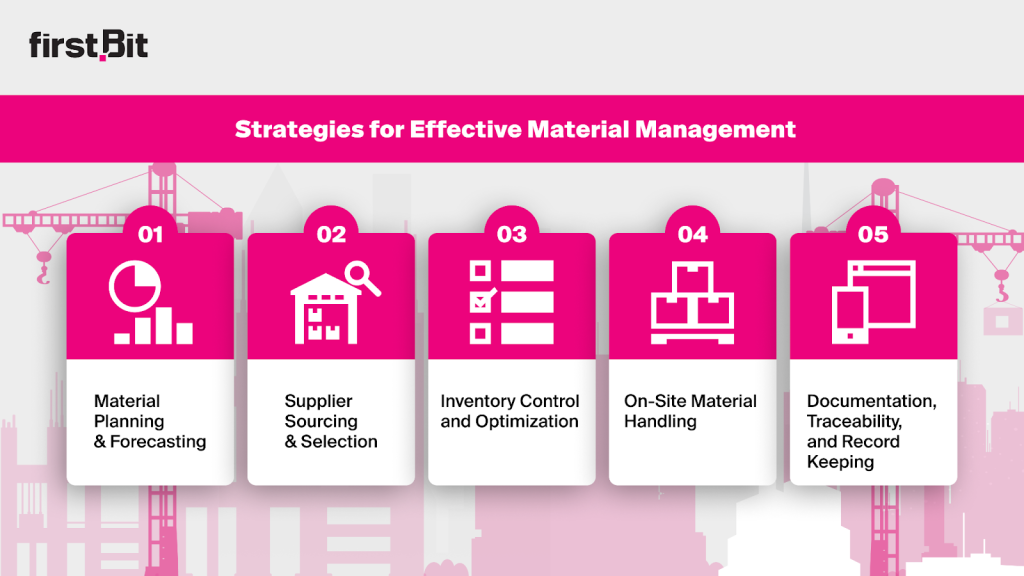
Strategies for effective material management
With these basics in place, you can focus on the key practices that shape an effective material management strategy.
Material Planning & Forecasting
In material management in construction, the first step is defining what materials you need and when you need them. You align demand with the project schedule and break it down by tasks, which keeps material flow management tied to real work, not rough estimates.
To forecast accurately, review past projects, confirm supplier lead times, and use digital planning tools. This reflects the practical material management meaning: aligning materials with real schedule needs, reducing storage pressure, and timing deliveries so crews can install materials right away.
Supplier Sourcing & Selection
Strong procurement material management starts with choosing suppliers you can rely on. Evaluate vendors based on delivery reliability, lead times, price consistency, and product quality. Centralized purchasing and an approved vendor list keep your material management system consistent across projects.
Long-term agreements can stabilize pricing and lock in delivery windows. Keep communication precise so gaps do not become schedule issues, and confirm delivery dates, quantities, and required quality in writing.
Inventory Control and Optimization
Inventory control is the operational core of material management. You manage it by knowing what you have, where it is, and when you need to reorder. Real-time tracking across warehouses and job sites improves material management in ERP because the system can only plan correctly when inventory data stays current.
Category-based organization makes items easier to find, while regular stock counts and clear reorder points prevent shortages and reduce the cost of holding excess stock. This is also where material management KPI tracking often starts, because stock accuracy and turnover depend on clean inventory records.
On-Site Material Handling
On-site control keeps material flow management intact once deliveries reach the project. Handle materials efficiently from the moment they arrive by using secure storage zones, clear labeling, and layout planning that places materials close to the installation area.
Rotate stock to reduce damage and deterioration, especially for items with sensitive storage conditions. Clear safety and handling procedures reduce waste and keep work moving without unnecessary site disruption.
Documentation, Traceability, and Record Keeping
Traceability is what makes a material management system dependable under real site pressure. Record who received each material, when it was issued, and where it went next. Digital logs, receipts, and delivery confirmations keep the data organized and searchable within material management in ERP.
Version-controlled documentation reduces errors and creates a clean audit trail. With accurate records, you can verify usage, catch discrepancies early, and support project controls, compliance requirements, and KPI reporting.
ERP Capabilities for Material Management in Construction
An ERP's material management system keeps the procurement, inventory, logistics, and project teams on the same dataset.
The company reported measurable gains in the case study of the ERP rollout: average SKU inventory accuracy reached 99.97%, OTD averaged 63.88% against a 62% target, and OTIF averaged 57.05% against a 55% target. Meanwhile, logistics costs fell by 31% (2018–2022), and revenue grew by about 55% [?] .
The study highlights the factors that facilitated adoption, including clear communication, team buy-in, and structured training during the rollout process.
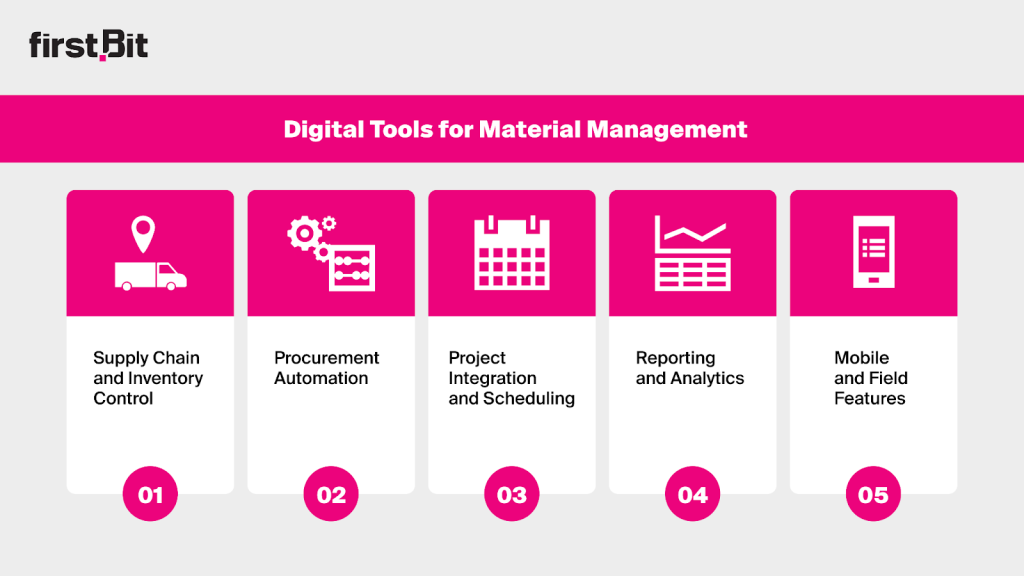
ERP Capabilities for Material Management in Construction
Supply Chain and Inventory Control
With material management in construction, visibility matters more than volume. ERP gives you live inventory balances across warehouses and sites, plus a clear status on what is on order and what is already in transit. This supports material flow management because you can track receipts, transfers, and issues in real time.
When the system flags low stock early and shows delivery delays in real time, your team can address issues before they result in lost days on site. This level of visibility strengthens the overall material management system by allowing teams to intervene before shortages escalate. Consistent tracking also improves planning accuracy and reinforces disciplined material management in ERP environments.
Procurement Automation
Procurement material management also becomes easier to control when ERP connects purchasing to demand and stock rules. Instead of chasing approvals and updates across emails, you generate purchase requests and orders from defined triggers, keep approvals traceable, and follow each order through delivery confirmation.
Supplier performance tracking stays in one place, which helps you manage reliability and lead times, not just price. Over time, centralized data highlights patterns in vendor performance and supports stronger decision-making tied to material management KPIs. This prevents procurement from becoming reactive and keeps purchasing aligned with project priorities.
Project Integration and Scheduling
The real value shows up when materials follow the schedule, not the other way around. ERP helps you link demand to the timeline, align delivery dates with milestones, and adjust plans when schedules change. That keeps critical items from arriving too early, too late, or out of sequence.
Reporting and Analytics
ERP reporting then pulls it together. You can review usage trends, forecast demand based on historical consumption and current project needs, and track planned vs. actual usage without rebuilding spreadsheets every week. This is also where material management KPIs typically sit, but the foundation starts here, with clean data and consistent transactions.
Mobile and Field Features
If field updates arrive late, inventory records drift out of sync. Mobile entry lets site teams confirm receipts, record issues, and log usage on the spot, keeping inventory and delivery status current. This real-time capture strengthens the material management system by ensuring ERP data reflects actual site conditions. Accurate field input also improves material management in ERP by reducing delays between physical movement and system records.
Key Performance Indicators (KPIs) for Material Management & ERP
KPIs transform material management into a deliberate process, rather than an intuitive one. In construction, most measurement frameworks focus on time, cost, and quality first, then expand to include safety, sustainability, and client satisfaction.
Inventory and Supply Chain KPIs
Below are key inventory and supply chain KPIs that help you spot inefficiencies and improve operational performance:
-
The inventory turnover ratio shows how often you cycle inventory through your business. It's important to note that slow turnover can be a sign of overbuying, poor planning, or items getting stuck in the wrong place. Use the ratio to identify categories that sit too long, and then adjust reorder settings and buying frequency instead of "adding more stock."
-
Stock accuracy compares system balances to physical counts. This is vital because every planning decision in ERP depends on whether the data reflects reality. Use stock accuracy to identify the source of errors, such as receiving, issuing, transfers, or late postings. Then, tighten the transaction discipline that is causing the mismatch.
-
Order fulfillment cycle time tracks the time it takes to fulfill a request, from the time the need arises to the time the order is delivered or issued. It is crucial to understand that long cycles can conceal delays in approvals, purchasing, supplier lead times, or internal processes. Use this metric to break the cycle into stages inside the ERP system, then identify and address the stage that consistently causes delays.
Cost and Financial KPIs
Here’s a set of essential inventory and supply chain KPIs to help you track performance and uncover improvement opportunities:
-
Material cost variance measures the gap between planned and actual material costs. It shows you whether overruns come from price changes, waste, rework, or poor estimating. Use it to separate price variance from quantity variance, then correct the root cause instead of treating every overrun as “market conditions.”
-
Budget adherence shows how often projects stay within the original estimate. It matters because material spend is one of the fastest ways to lose budget control across multiple packages. Use it to track adherence at the work-package level, then enforce tighter controls where variance repeats.
Strategic and Construction-Specific KPIs
The construction sector in Saudi Arabia is often assessed using outdated metrics, which poses a risk when implementing projects worth hundreds of billions of dollars.
In light of Vision 2030 implementation, the study identified ten key performance indicators, which now include important aspects such as safety, sustainable development, and end-user satisfaction [?] .
These specific criteria allow for comprehensive project management and ensure success that goes beyond budget and deadline constraints.
The KPI:
- Time shows whether you deliver on schedule and avoid delays that trigger idle time, penalties, and re-sequencing.
- Cost keeps spending under control and protects margins when prices, scope, or productivity change.
- Quality reduces defects and rework that consume labor, materials, and time.
- Safety prevents incidents that can stop work, increase insurance exposure, and create legal and reputational risk.
- Sustainable construction helps reduce waste and meet client expectations for responsible sourcing and environmental performance.
- Client satisfaction supports repeat work, smoother approvals, and fewer disputes over scope and delivery.
- End-user satisfaction reflects whether the finished asset performs as intended, reducing handover issues and post-completion fixes.
- Risk management helps identify threats early and prevent them from becoming claims, delays, or cost overruns.
- Labor productivity shows how efficiently crews convert hours into progress, directly affecting time and cost.
- Profitability confirms whether the project generates profit after all direct and indirect costs.
Deploying new KPIs is a transition from reactive control to proactive project management. Ultimately, the correct selection of indicators provides a direct means of improving operational efficiency and achieving predictable results.
How FirstBit ERP Helps Optimize Material Flow Management in KSA
FirstBit ERP allows contractors in KSA to manage materials as a controlled workflow. It aligns demand with the schedule, tightens site-to-warehouse execution, and keeps procurement traceable from start to finish.
The system assists with planning. FirstBit ERP links material demand to project activities and milestones, ensuring that each delivery window aligns with the construction sequence.
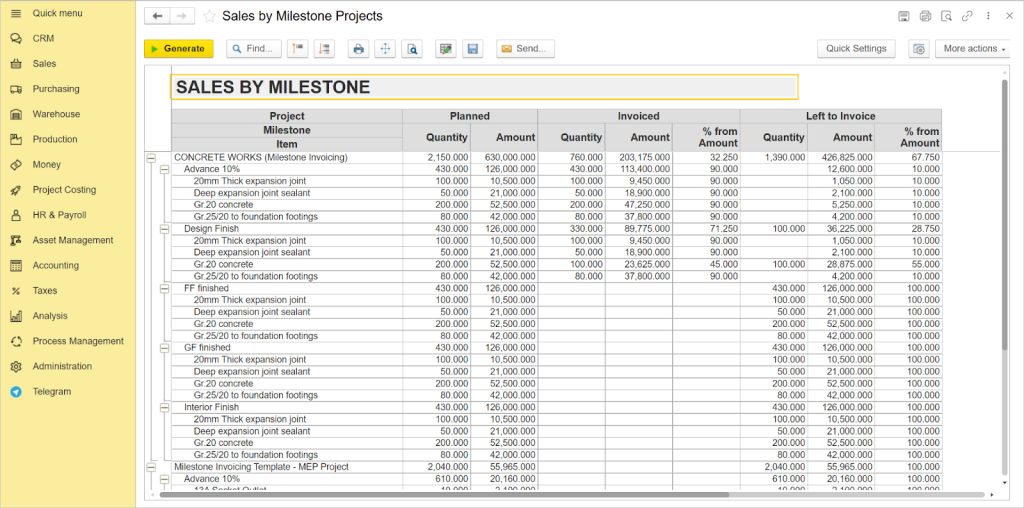
Planned quantities by project milestone, with progress shown against invoiced volumes
When the schedule changes, the system allows you to adjust the planned quantities and timing all in one place. This reduces the number of early deliveries, which strain storage, and late deliveries, which stall critical tasks.
FirstBit also improves execution on the ground. FirstBit ERP records warehouse and site receipts, transfers, issues, and returns, so you always know where materials are and how they moved.
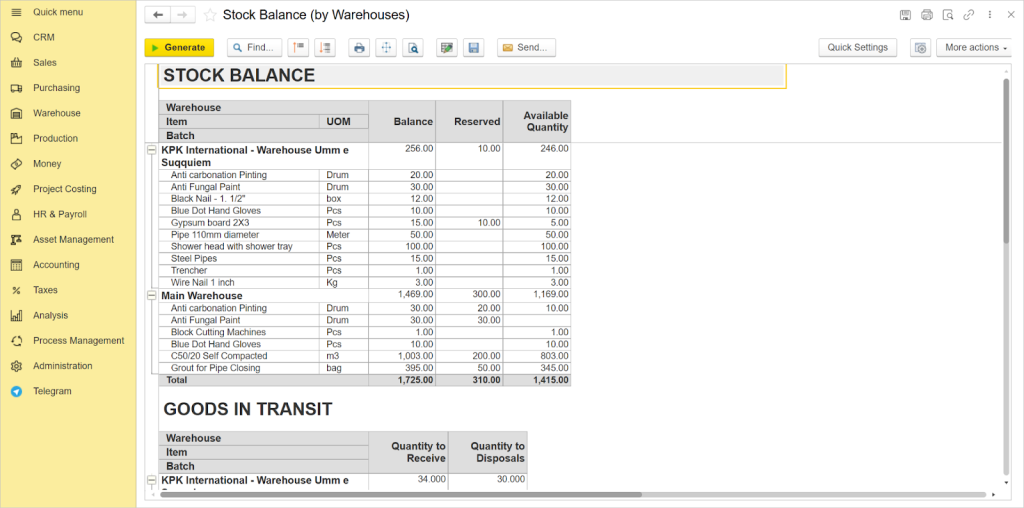
Stock balance by warehouse with reserved, available, and in-transit quantities
This helps prevent "lost" stock during inter-site transfers and makes controlling allocations easier when several projects draw from the same inventory.
Finally, FirstBit ERP strengthens procurement discipline. The system routes purchase requests through approvals, converts them into purchase orders, and maintains visibility of delivery status until receipt confirmation.
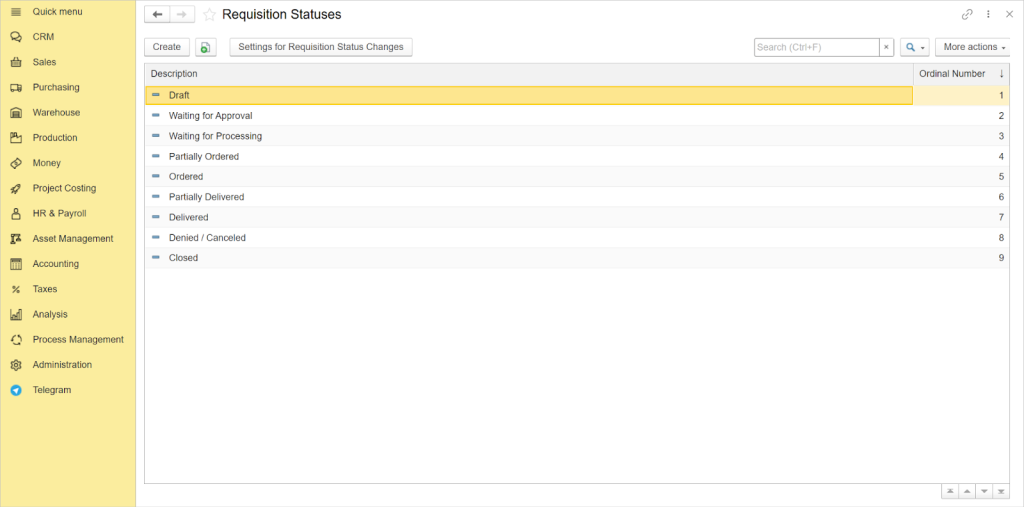
Requisition statuses in FirstBit ERP
Keep supplier history and order performance in one system, and your team will manage lead times and reliability using real data instead of scattered emails and spreadsheets.
FirstBit ERP supports compliance workflows aligned with ZATCA requirements by keeping supplier documentation, tax invoicing records, and purchase-to-receipt audit trails organized in one place. This makes it easier to validate invoices against purchase orders (POs) and goods receipts, as well as maintain consistent records for internal controls and potential reviews.
Key Takeaways
Material management in construction is about preventing them through structure. Contractors who treat materials as a controlled workflow gain visibility, timing discipline, and fewer surprises. Alongside, strong systems help reduce firefighting and replace guesswork with predictable execution.
For Saudi contractors, a disciplined material management system supported by ERP creates measurable control. Clear material management KPIs turn performance into data instead of opinion. That visibility allows faster decisions and steadier project outcomes.
No workflow removes uncertainty entirely, but tighter coordination limits how often small gaps grow into delays. When planning, procurement, and execution move together, projects run with greater consistency and fewer corrections.
F.A.Q.
What is KPI in material management?
What is the importance of ERP in material management?
What is meant by material management?
What is MRP in simple words?

Anna Fischer
Construction Content Writer
Share this article
'%3e%3cg%20clip-path='url(%23clip1_6548_6055)'%3e%3cpath%20d='M13.974%2015.6195C14.2724%2016.0185%2014.6532%2016.3487%2015.0905%2016.5876C15.5278%2016.8265%2016.0114%2016.9686%2016.5084%2017.0042C17.0055%2017.0398%2017.5043%2016.9681%2017.9712%2016.7939C18.4381%2016.6198%2018.8621%2016.3472%2019.2143%2015.9948L21.2994%2013.9098C21.9324%2013.2544%2022.2827%2012.3766%2022.2747%2011.4654C22.2668%2010.5543%2021.9014%209.68269%2021.257%209.03839C20.6127%208.39408%2019.7412%208.02862%2018.83%208.0207C17.9189%208.01278%2017.0411%208.36305%2016.3857%208.99606L15.1902%2010.1845M16.754%2014.2295C16.4555%2013.8305%2016.0747%2013.5003%2015.6374%2013.2614C15.2002%2013.0225%2014.7166%2012.8804%2014.2196%2012.8448C13.7225%2012.8092%2013.2237%2012.8809%2012.7568%2013.0551C12.2899%2013.2292%2011.8659%2013.5018%2011.5136%2013.8542L9.42861%2015.9392C8.7956%2016.5946%208.44534%2017.4724%208.45326%2018.3836C8.46117%2019.2947%208.82664%2020.1663%209.47094%2020.8106C10.1152%2021.4549%2010.9868%2021.8204%2011.898%2021.8283C12.8091%2021.8362%2013.6869%2021.4859%2014.3423%2020.8529L15.5308%2019.6645'%20stroke='%235F7896'%20stroke-width='1.39002'%20stroke-linecap='round'%20stroke-linejoin='round'/%3e%3c/g%3e%3c/g%3e%3crect%20x='0.438953'%20y='0.438953'%20width='28.9709'%20height='28.9709'%20rx='14.4855'%20stroke='%235F7896'%20stroke-width='0.877907'/%3e%3cdefs%3e%3cclipPath%20id='clip0_6548_6055'%3e%3crect%20width='29.8488'%20height='29.8488'%20rx='14.9244'%20fill='white'/%3e%3c/clipPath%3e%3cclipPath%20id='clip1_6548_6055'%3e%3crect%20width='16.6802'%20height='16.6802'%20fill='white'%20transform='translate(7.02344%206.58435)'/%3e%3c/clipPath%3e%3c/defs%3e%3c/svg%3e)


Related articles


See all








See FirstBit ERP solutions in action
Discover how our system solves the unique challenges of contractors in a personalized demo.
After the demo you will get a quotation for your company.