


How ERP Systems Support Saudi Arabia’s Vision 2030: Digital Transformation
23 Feb 2026
•
11 min read

Anna Fischer
Construction Content Writer


Saudi Arabia's Vision 2030 provides a clear framework for how Saudi organizations plan, fund, and deliver services. Digital capability is not a side project. Rather, it sits at the intersection of policy, budgets, and execution. Enterprise resource planning (ERP) serves as the foundation of digital transformation Vision 2030, giving leaders a unified operating system for finance, human resources, supply chains, and projects.
When executed well, ERP transforms strategy into repeatable routines and measurable outcomes that align with Saudi Vision 2030. When implemented poorly, however, ERP creates more work and hides risk. This article concentrates on the standards of excellence that are applied to public entities and private contractors operating within the Kingdom.
Saudi Vision 2030 and the Digital Agenda
To frame the digital mandate clearly, the next subsections outline how technology supports diversification, sustainability, and governance in practice.
Key Vision 2030 Goals Tied to Technology
Saudi Vision 2030 connects technological advancement with three main national priorities:
- Economic diversification implies expanding non-oil sectors, such as manufacturing, logistics, tourism, and finance, through automation and digital integration.
- Sustainability priority means using smart energy management, analytics, and automation to optimize resource use, reduce emissions, and strengthen environmental accountability.
- Governance reform seeks to improve transparency and efficiency through data-driven decision-making and unified systems that connect public institutions and improve service delivery.
These priorities make technology a prerequisite for measurable outcomes, ensuring that sector growth, environmental targets, and institutional performance are tracked on connected systems rather than isolated programs.
National Policies Accelerating Digitization
Government initiatives such as the Cloud First Policy, the National Strategy for Data and AI ( SDAIA), and e-government programs are accelerating the Kingdom’s digital shift.
These frameworks encourage cloud-based ERP adoption, enabling seamless access to real-time data and integrated decision-making across ministries and enterprises.
Broader Ecosystem Enablers
SDAIA provides direction and shared platforms for data and AI. The National Data Strategy defines classification, privacy, sharing, and security rules that make interagency collaboration workable. Open data portals, including open.data.gov.sa, expand access to official datasets for researchers, operators, and investors, which lowers due diligence costs and improves market visibility.
The Strategic Role of ERP in Vision 2030, Saudi Arabia
With that context, the sections that follow show where ERP changes day-to-day execution across government efficiency, sector growth, mega-project delivery, data-driven services, and compliance.
Enhancing Government Efficiency and Transparency
In one Saudi public‑sector case study, an ERP rollout delivered more than system change[?]. Manual approvals, paper‑based procurement, and disjointed departmental processes gave way to centralized workflows and live budgeting dashboards.
Departments could now track commitments, compare actuals to plans, and flag deviations immediately, which reinforced oversight and reduced waste. In the context of Saudi Arabia Projects Vision 2030, where government entities must deliver more with less, this kind of visibility and process discipline is essential.
Supporting Economic Diversification and Sector Growth
As Saudi Arabia works to diversify its economy beyond oil, sectors like construction, manufacturing, and logistics are playing a pivotal role.
By offering real-time visibility into operations, ERP systems help organizations adapt to market demands, streamline workflows, and stay competitive, ultimately contributing to the broader goals of Saudi Vision 2030’s economic diversification efforts.
Enabling Large-Scale Projects and Infrastructure Development
Saudi Vision 2030 includes several ambitious mega-projects, such as NEOM, The Red Sea Project, and Qiddiya. These large-scale infrastructure projects require precise coordination and real-time management. ERP systems provide the foundation needed to oversee thousands of contracts, suppliers, and milestones simultaneously.
By integrating project management, procurement, and resource allocation in one platform, ERP systems enable project leaders to track progress, control costs, and ensure that work is completed on schedule.
Driving Innovation, Data-Driven Governance, and Smart Services
As Saudi Arabia builds its digital economy, ERP systems are evolving beyond traditional management tools into powerful data engines. When integrated with AI, analytics, and IoT, ERP platforms become the backbone for predictive insights, operational optimization, and the delivery of innovative services. These systems provide the infrastructure needed to drive smart city initiatives and improve public sector services, in line with the objectives of Saudi Vision 2030.
For example, ERP systems can identify service gaps, monitor citizen satisfaction, and optimize resource allocation in real time. This enables governments and businesses to make data-driven decisions that improve service quality and meet the needs of a growing population.
Ensuring Regulatory Compliance and Localization
ERP systems in Saudi Arabia ensure compliance with evolving regulations and local business practices. They integrate with ZATCA for e-invoicing and VAT, minimizing manual intervention. These systems also support Arabic interfaces and local reporting formats, helping both public and private entities operate efficiently within the regulatory framework.
As Saudi Vision 2030 progresses, policies and reporting standards will continue to evolve. ERP systems are adaptable, allowing quick updates to stay compliant with new regulations, helping organizations remain agile and future-ready within Saudi Arabia’s fast-moving digital landscape.
Core ERP Capabilities Driving the Digital Transformation Vision 2030
The capabilities below translate Saudi Vision 2030 objectives into operational routines that leaders can measure and manage.
Unified Financial Management and Transparency in Saudi Vision 2030
In large-scale projects, accurate financial management is critical. ERP systems provide a unified general ledger that supports multi-company accounting and intercompany eliminations, reducing manual reconciliations and closing delays. Real-time dashboards give decision-makers, whether ministers, CEOs, or project leaders, a clear view of spending, commitments, and liquidity, helping them stay on top of finances at all times.
Integrated budgeting and forecasting link plans to actual performance, making variance analysis part of weekly management rather than a quarterly task. With audit trails and role-based access, ERP systems strengthen governance by ensuring transparency and accountability.
Human Capital and Workforce Management in 2030 Vision Saudi Arabia
Managing a skilled workforce is essential for the success of large-scale projects. ERP systems help manage the entire employee lifecycle, from recruitment to performance and training. Workforce planning tools align employee skills with project needs, ensuring the right talent is available at the right time. Productivity analytics highlight gaps, allowing project managers to adjust plans and optimize resources.
Additionally, ERP systems automate time and attendance tracking, payroll, and employee self-service functions, reducing administrative overhead and improving data accuracy. HR metrics can also be tied to national objectives like Saudization, helping companies track progress and meet local hiring goals.
Supply Chain, Procurement and Inventory Optimization
Efficient procurement and inventory management are critical for large construction projects. ERP systems streamline procurement, automate vendor communications, and centralize contracts and bids. Inventory tools ensure materials are available on time, and automated reorder alerts reduce excess stock and working capital.
By integrating logistics and distribution, ERP systems ensure that procurement decisions reflect real lead times, transport constraints, and on-site consumption. This optimization leads to more accurate planning, fewer delays, and lower costs across the supply chain.
Project and Asset Management for Mega Projects in Saudi Vision 2030
For large-scale infrastructure projects, managing resources, timelines, and costs is crucial. ERP systems provide structured planning for tasks, milestones, and dependencies, linking them to budgets and resource plans for labor, equipment, and materials.
Project leaders can track progress, forecast costs, and adjust plans in real time. Asset management ensures equipment maintenance, optimal utilization, and effective lifecycle planning, minimizing downtime and avoiding delays. Additionally, scenario modeling helps decision-makers assess risks like delays or price fluctuations before they affect the project.
Analytics, AI and Predictive Insights for Vision 2030 Saudi Arabia Projects
ERP systems equipped with analytics and AI turn operational data into actionable insights. Machine learning detects anomalies, forecasts demand, and identifies risks early. Interactive dashboards present key metrics across projects, finances, and supply chains, enabling decision-makers to act proactively.
These systems also support predictive maintenance in industrial projects and optimize resource allocation in public services, ensuring smoother project delivery and fewer surprises.
Compliance, Localization and Regulatory Integration
ERP systems ensure compliance with Saudi regulations by integrating with ZATCA for e-invoicing and VAT. They support Arabic language interfaces, local tax logic, and statutory reporting formats required by authorities.
As regulations evolve, ERP systems allow for quick updates to stay compliant. Built-in security controls, data sovereignty, and audit logs ensure that sensitive information is protected while meeting public sector and regulated industry requirements. Such sections as FirstBit ERP are designed with these capabilities in mind, ensuring businesses remain compliant and adaptable within Saudi Arabia’s regulatory framework.
Roadmap for Adopting ERP under Saudi Vision 2030
The next steps provide a practical sequence from assessment to go-live that organizations can apply with clear owners, timelines, and metrics.

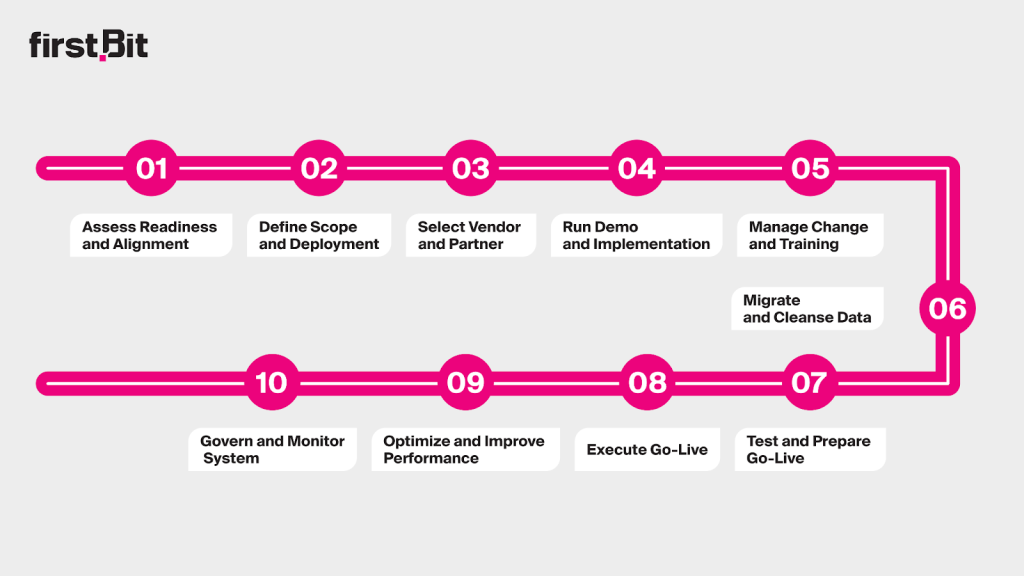
Roadmap for adopting ERP under Saudi Vision 2030
Assess Readiness and Alignment
Begin with a brief digital maturity review. Map your current systems, process bottlenecks, data quality, and skill gaps. Then, translate the priorities of Saudi Vision 2030 into concrete ERP objectives, such as faster cycle times, greater transparency, and stronger cost control.
Name sponsors, a steering committee, and process owners, so decisions come quickly. Define a small set of KPIs that tie to value, for example, close time, procurement lead time, on-time payments, and compliance rates.
Define Scope and Deployment
Select a deployment approach that aligns with your risk tolerance and scale requirements. Consider cloud for speed and resilience, hybrid for specific workloads or data residency requirements, or on-premises if mandated. Select the module set that addresses your immediate needs, which are usually related to finance, procurement, inventory, projects, and HR.
Plan for localization early on, including ZATCA e-invoicing, VAT, an Arabic UI, and statutory reports. Document integrations to CRM, legacy tools, BIM, IoT, and data platforms. Decide where APIs, ETL, or event streams will be used.
Select Vendor and Partner
Create a shortlist of ERP platforms and local partners with a proven track record of successful implementations in Saudi Arabia. Verify their regulatory coverage, industry references, and experience with Saudi Vision 2030 projects. Then, review their support structure, upgrade schedule, SLAs, and security standards.
Negotiate scope, deliverables, and change control clearly to prevent scope drift. If FirstBit ERP is selected, note that it already supports VAT and ZATCA e-invoicing requirements, minimizing the need for additional customization during compliance testing.
Run Demo and Implementation
Start with a focused demo or minimum viable product (MVP) that demonstrates one function or project from start to finish. Use this to validate integrations, data flow, and user adoption.
Then, refine process designs before a wider rollout. Expand in logical phases, for example, starting with core finance, then moving on to procurement and inventory, and finally HR and projects, rather than attempting a big bang.
Manage Change and Training
Treat change as a workstream. Communicate the why, the milestones, and the impact on each role. Build a champion network inside business units. Train super users first, then run role-based workshops with real data. Provide a visible help desk and feedback loop so issues are resolved quickly and lessons feed back into configuration.
Migrate and Cleanse Data
Profile the legacy data and resolve any quality issues before mapping it to the new schema. Separate the master, historical, and open transactional data, then determine which data will be moved and which will be archived.
Practice the cut-over process in a non-production environment, incorporating fallback and rollback steps as needed. As the go-live date approaches, stop making nonessential changes to protect data integrity.
Test and Prepare Go-Live
Perform layered testing, including functional, integration, performance, security, and user acceptance testing. Perform stress tests on peak loads and validate compliance outputs, ranging from e-invoices to audit logs. Create a go-live checklist and communication plan. Assemble a hypercare team with clear triage rules and response times.
Execute Go-Live
Depending on operational risk and seasonality, execute go-live in phases or all at once. During hypercare, closely monitor key processes, track defects and fixes transparently, and ensure decision makers are available to remove blockers. Capture user feedback daily and convert it into prioritized work items.
Optimize and Improve Performance
Compare the results to the original KPIs and business case. Then, tune configurations, simplify workflows, and retire temporary workarounds.
Once core stability is proven, add capabilities such as advanced analytics, AI use cases, mobile, and IoT connections. Maintain a clear upgrade path to ensure that new regulatory and security updates are implemented without disruption.
Govern and Monitor System
Establish a long-term operating model. Maintain a standing Change Advisory Board, process area owners, and a release calendar. Continuously monitor system health, security, and compliance, and perform periodic audits and patching. Plan for scalability as initiatives expand, new entities are added, or Saudi Vision 2030 priorities evolve to ensure the platform remains a reliable foundation for growth.
FirstBit: Empowering Saudi Vision 2030 Through ERP-Driven Digital Transformation
As Saudi Arabia advances its Vision 2030 goals, the construction industry plays a key role in transforming the nation’s infrastructure, economy, and urban development. Achieving these ambitious objectives requires seamless integration, real-time visibility, and streamlined processes, which can be fully supported by ERP systems like FirstBit.
Below are three ways FirstBit ERP contributes to Saudi Vision 2030 by driving digital transformation across the construction sector:
360° Project and Financial Oversight
FirstBit ERP offers a unified platform that allows contractors to monitor budgets, commitments, and actual costs in real time. With this system, users in Saudi Arabia can identify early budget deviations before they escalate.
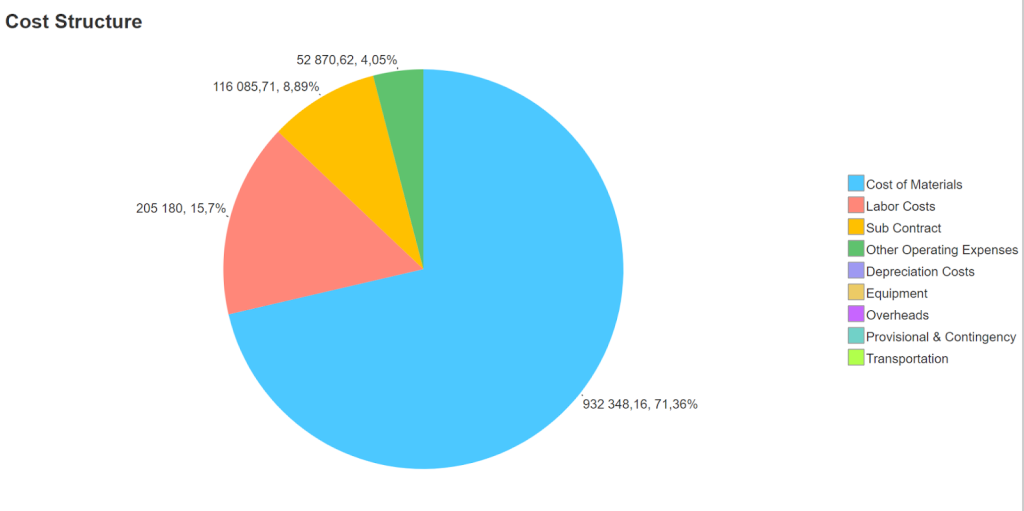
Cost Structure diagram in FirstBit ERP
Dashboards provide a clear view of spending by project and cost center, aligning with Vision 2030’s focus on fiscal discipline and efficiency in large-scale construction programs.
Supply Chain and Asset Efficiency at Scale
The system integrates procurement, inventory, equipment tracking, and project logistics into one cohesive workflow. Contractors in Saudi Arabia can track material orders, monitor equipment usage on-site, and manage subcontractor performance from a single interface.
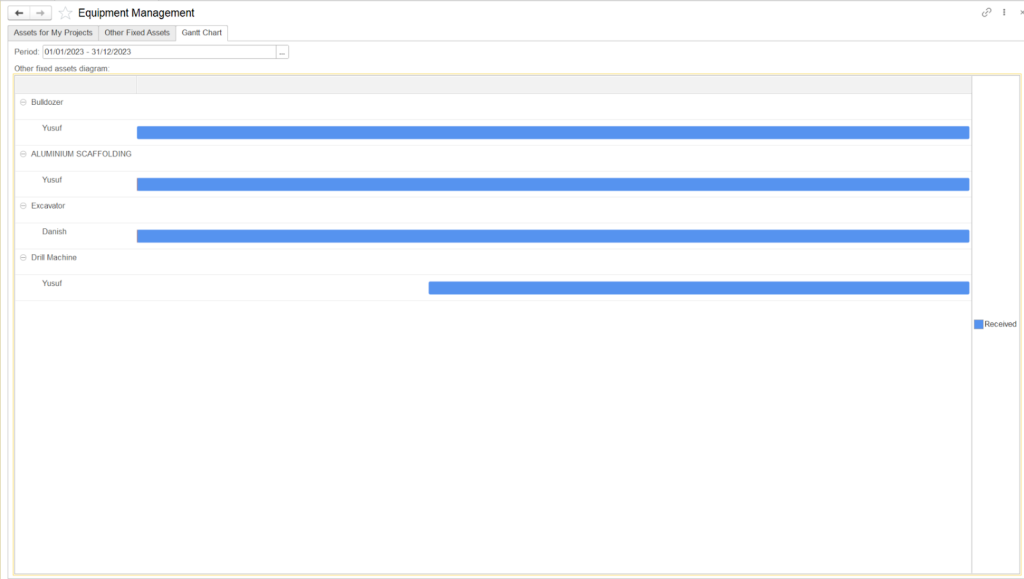
Equipment usage in FirstBit
These capabilities reduce waste, improve delivery reliability, and enable the simultaneous management of multiple large-scale projects.
Built-in Compliance and Localization for KSA
FirstBit ERP is designed to meet Saudi Arabia’s regulatory requirements, including integration with the Zakat, Tax, and Customs Authority (ZATCA) for e-invoicing and VAT. The system supports both Arabic and English interfaces and offers the necessary statutory reporting.
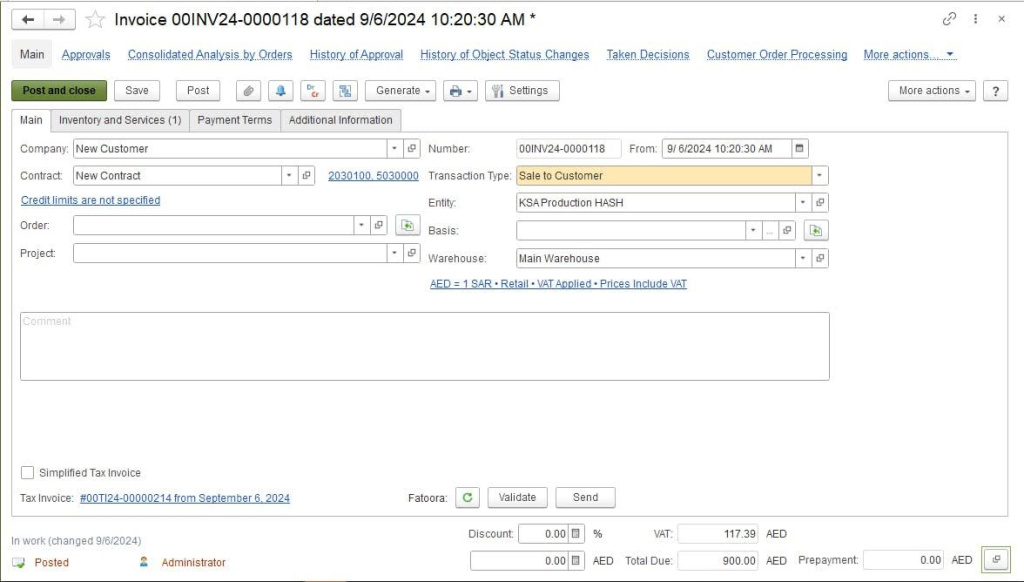
Invoice creating in FirstBit
These features help contractors stay compliant, ensure quick audit readiness, and maintain alignment with the governance goals of Vision 2030 while focusing on project delivery.
Conclusion
ERP systems are essential tools for Saudi Arabia’s construction sector, enabling greater efficiency, transparency, and compliance. By integrating core business functions such as finance, procurement, and project management into one unified platform, ERP systems help contractors address common industry challenges like cost overruns, delays, and resource inefficiencies.
As Saudi Arabia advances Vision 2030 technology, ERP solutions play a crucial role in supporting mega-projects, driving economic diversification, and ensuring regulatory compliance. These systems enable organizations to manage large-scale projects effectively and maintain smooth operations across various sectors.
With real-time insights and robust data-driven decision-making capabilities, ERP systems not only improve project outcomes but also pave the way for sustainable growth and innovation in the Kingdom's rapidly evolving construction landscape.
F.A.Q.
How does ERP support Saudi Vision 2030?
Why is digital transformation critical for construction companies in KSA?
How does ERP improve compliance with Saudi regulations?
Does using ERP make a company “Vision 2030-ready”?

Anna Fischer
Construction Content Writer
Share this article
'%3e%3cg%20clip-path='url(%23clip1_6548_6055)'%3e%3cpath%20d='M13.974%2015.6195C14.2724%2016.0185%2014.6532%2016.3487%2015.0905%2016.5876C15.5278%2016.8265%2016.0114%2016.9686%2016.5084%2017.0042C17.0055%2017.0398%2017.5043%2016.9681%2017.9712%2016.7939C18.4381%2016.6198%2018.8621%2016.3472%2019.2143%2015.9948L21.2994%2013.9098C21.9324%2013.2544%2022.2827%2012.3766%2022.2747%2011.4654C22.2668%2010.5543%2021.9014%209.68269%2021.257%209.03839C20.6127%208.39408%2019.7412%208.02862%2018.83%208.0207C17.9189%208.01278%2017.0411%208.36305%2016.3857%208.99606L15.1902%2010.1845M16.754%2014.2295C16.4555%2013.8305%2016.0747%2013.5003%2015.6374%2013.2614C15.2002%2013.0225%2014.7166%2012.8804%2014.2196%2012.8448C13.7225%2012.8092%2013.2237%2012.8809%2012.7568%2013.0551C12.2899%2013.2292%2011.8659%2013.5018%2011.5136%2013.8542L9.42861%2015.9392C8.7956%2016.5946%208.44534%2017.4724%208.45326%2018.3836C8.46117%2019.2947%208.82664%2020.1663%209.47094%2020.8106C10.1152%2021.4549%2010.9868%2021.8204%2011.898%2021.8283C12.8091%2021.8362%2013.6869%2021.4859%2014.3423%2020.8529L15.5308%2019.6645'%20stroke='%235F7896'%20stroke-width='1.39002'%20stroke-linecap='round'%20stroke-linejoin='round'/%3e%3c/g%3e%3c/g%3e%3crect%20x='0.438953'%20y='0.438953'%20width='28.9709'%20height='28.9709'%20rx='14.4855'%20stroke='%235F7896'%20stroke-width='0.877907'/%3e%3cdefs%3e%3cclipPath%20id='clip0_6548_6055'%3e%3crect%20width='29.8488'%20height='29.8488'%20rx='14.9244'%20fill='white'/%3e%3c/clipPath%3e%3cclipPath%20id='clip1_6548_6055'%3e%3crect%20width='16.6802'%20height='16.6802'%20fill='white'%20transform='translate(7.02344%206.58435)'/%3e%3c/clipPath%3e%3c/defs%3e%3c/svg%3e)




See FirstBit ERP solutions in action
Discover how our system solves the unique challenges of contractors in a personalized demo.
After the demo you will get a quotation for your company.